by Fabian Schlott (s1820044), Zeynep Ozcelik (s2103168) and Tsoek Weng Hui (s2092336)
Exhibition Concept
Travelling through European Colonialism is a temporary exhibition focused on depicting the gruesome reality of colonial policy employed by various European nations between 1800 to 1950. While colonialism as a foreign policy has been practiced across the world for centuries, this exhibition will only focus on the colonial exploits by the Netherlands, France, the British Empire, Italy and Belgium and portray some relevant objects that depict the effect and views they had on their respective colonized cultures.
Through the display of photographs, documents and objects of that time, one is able to witness the views and aims that the colonizing countries were holding at the time. This would lead to gaining a deeper understanding of how the colonizer-colonized power-dynamic functioned and the suffering the colonized cultures were put through due to this unequal relationship.
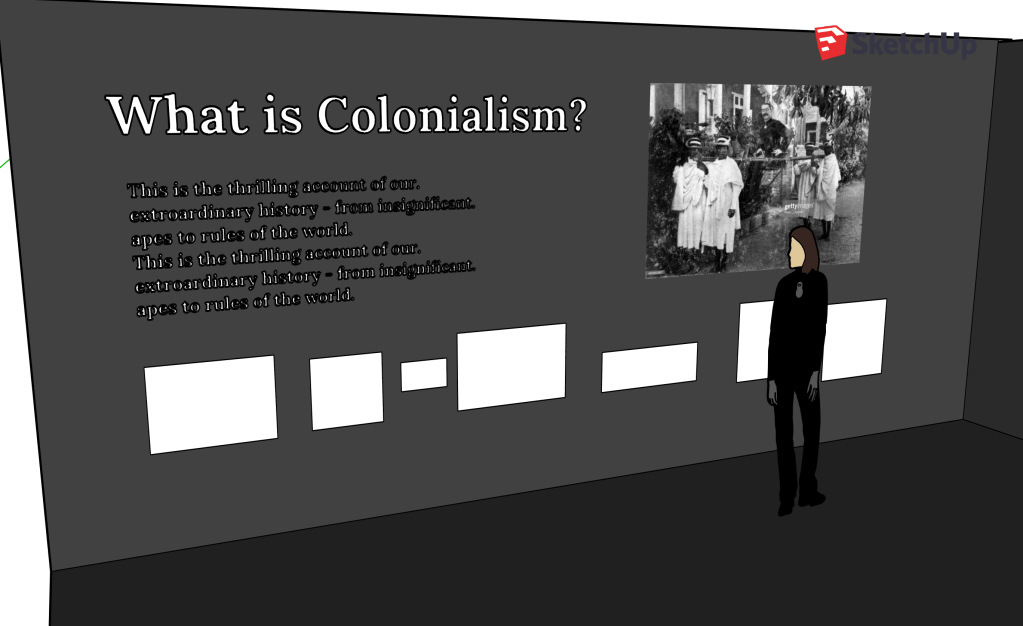
What is colonialism?
The history of this foreign policy can be traced back all the way to the Antiquity where powers such as Ancient Greece and Rome expanded their reach through the colonising of foreign lands. Colonialism is the practice of expanding a nation’s territory by invading and oppressing foreign cultures, generally in order to gain economic benefits through the exploitation of the natives and their resources. The subjugation of foreign populations is often accompanied with the forcing of the dominant culture’s values, religion, practices and traditions onto the natives. Subjugation includes practices such as enslaving and physical punishment of offenders, banning local culture and traditions to be practiced and indoctrination through educational reforms. Depicting the treatment of the colonized people at the hands of the dominant culture is one of the aims of this exhibition.
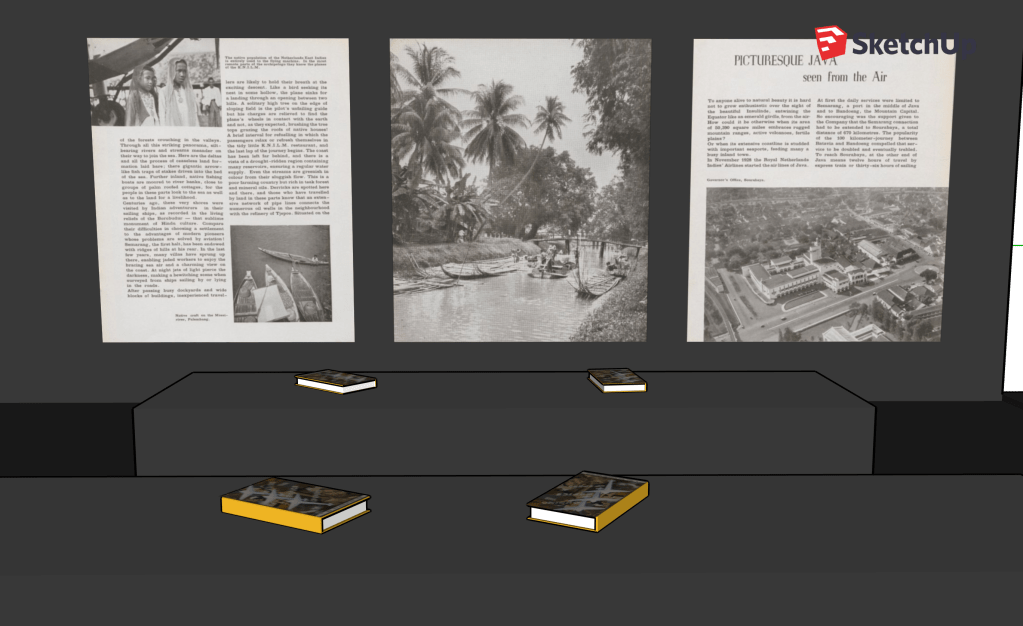
To embark on this journey, visitors are confronted with a peculiar travel brochure from the Royal Dutch Indies Airways (Koninklijke Nederlandsch-Indische Luchtvaart Maatschappij), published in the 1900s. Presented as a seemingly mundane vacation booklet, the brochure serves as gateway to raise awareness of and evaluate colonialism as an entity that haunts unknowingly in everyday objects, from simple holiday photographs to the masterful paintings from Picasso.
Precursor to the present
After the ‘What is Colonialism?’ exposition, visitors are invited to examine various artefacts, from commercial products to fine arts, that do not explicitly portray colonial horrors and evil-doings, but still inherit a subtle sentiment from the colonial interlude or a power inequality complex. The selected exhibits from around the world are exemplary products of what may be called cultural colonialism; the hegemonic influence of former colonial powers that are exerted onto domestic populations and ‘dependent’ or underdeveloped nations through education, political diplomacy, and cultural separation. As an interim exhibition on the period between the colonial empires to the present, ‘Precursor to the Present’ aims to conceptualise a framework that stimulates visitors to comprehend the intricacy of colonialism in all kinds of media.
Neocolonialism
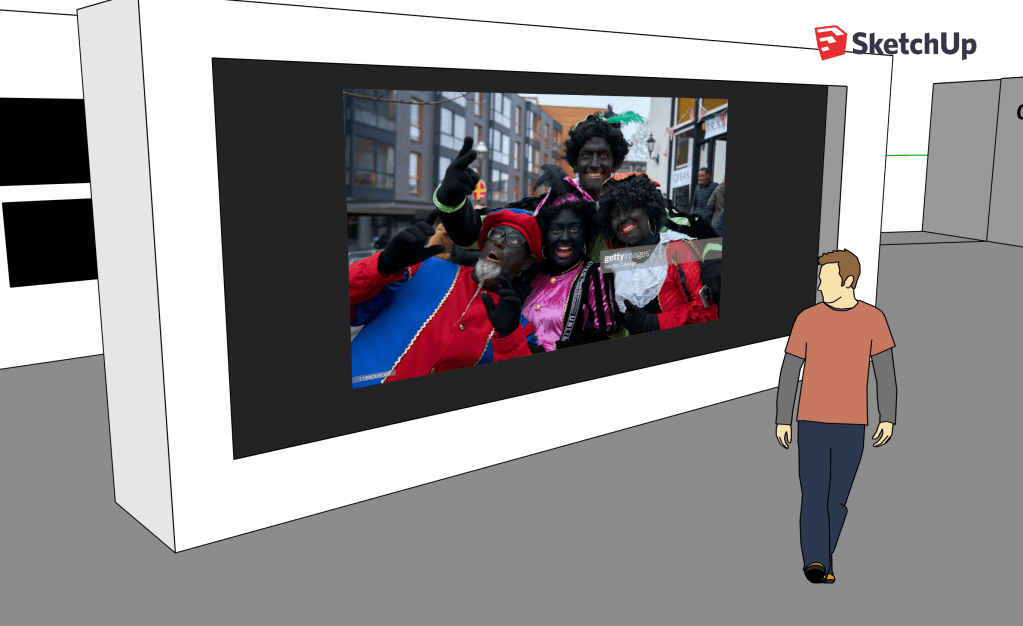
Travelling through European Colonialism concludes with a collection of contemporary samples drawn from social media, news, and art that adhere to a relatively new theory; Neocolonialism. This form of colonialism is widely based on capitalist-expansionist notions which encompass the exploitation and outsourcing of developing countries through mutual agreement. However, cultural- hegemony and appropriation are fascinating components as well, since such matters are continuously subject to controversy and discussion on contemporary power relations, in both developed and developing countries alike. In a highly globalised and interconnected world, cultural motifs and traditions are becoming increasingly allergic to being ‘tainted’ and ‘abused’ by those who do not rightfully own them, which exactly stirs polarised debates; Is it inappropriate if a blonde caucasian woman wears a Chinese Qipao as a party dress? Is the Black Panther movie an effective attempt to diversify Hollywood cinema? How can the world combat post-colonial troubles in the tumultuous status quo?
Collections and Cooperation (with museums)
The exhibition Travelling through European Colonialism is a result of highly co-operative process between several museums and digital collections based in Europe. The exhibition consists of digitally displayed booklets, photographs, objects and prints. The objects in this exhibition were borrowed these institutions and sources:
- Leiden University Library Digital Collections
- GettyImages
- Rijksmuseum, Stedelijk
- Kunstmuseum
- Van Gogh Museum – two from Van Gogh and two from Japanese ukiyo-e artist Utagawa Hiroshige.
- Palais de la Porte Dorée
- Africa Museum
- The Tate
In order to create the digital displays and interactive feedback room of the exhibition Travelling through European Colonialism collaborated with SouthernLight, a design company that creates digital experiences with the use of technology.
Atmosphere
Travelling through European Colonialism project images from unfiltered explicit parts of colonialism to a more informative and factual approach. At the beginning of the exhibition, viewers feel a sense of shock and disgust which gradually moves to cautious and critical stance. Therefore, the atmosphere changes from shocking to more nuanced. While the first room displays the reality of colonialism with explicit content, over the course of each room content becomes more subtle.
European Colonialism and You: Exhibition Design
Travelling through European Colonialism has been intentionally designed to be accessible to visitors of all ages and educational backgrounds and assumes minimal specialised or theoretical pre-existing knowledge of this part of history. With this in mind, we have curated the exhibition to give an overview of a part of European Colonialism that can be easily understood by virtually everyone, while not oversimplifying or obscuring vital information and experiences born out of the application of this foreign policy. Points made in the exhibition concept and each room’s theme are exemplified in a clear and understandably manner through the selected objects and their accompanying captions. the progression and timeline of the effects of colonialism are conveniently mirrored in the exhibition layout and one’s progression through the rooms, which will aid the understanding of visitors. The application of digital strategies will offer visitors another avenue to learn more about each object and theme in order to further solidify their understanding. These include strategies such as the use of QR codes attached to each object which once scanned lead the visitor to a more in-depth audio commentary. Besides that, the use of interactive touchscreens for each object promotes a closer connection between the viewer, the object and the exhibition as a whole. Handy booklets will be available in both digital and physical form in order to help the visitor find out more about the exhibition and individual rooms.
Copyright
In terms of copyright issues, purchasing content from Getty Images had brought about problems due to our limited budget. The price of the image increases as the size of the print increased. In addition, a considerable amount of objects we included in the exhibition are created by anonymous photographers, thus the copyrights could not be discussed.
Exhibition Floor Plan
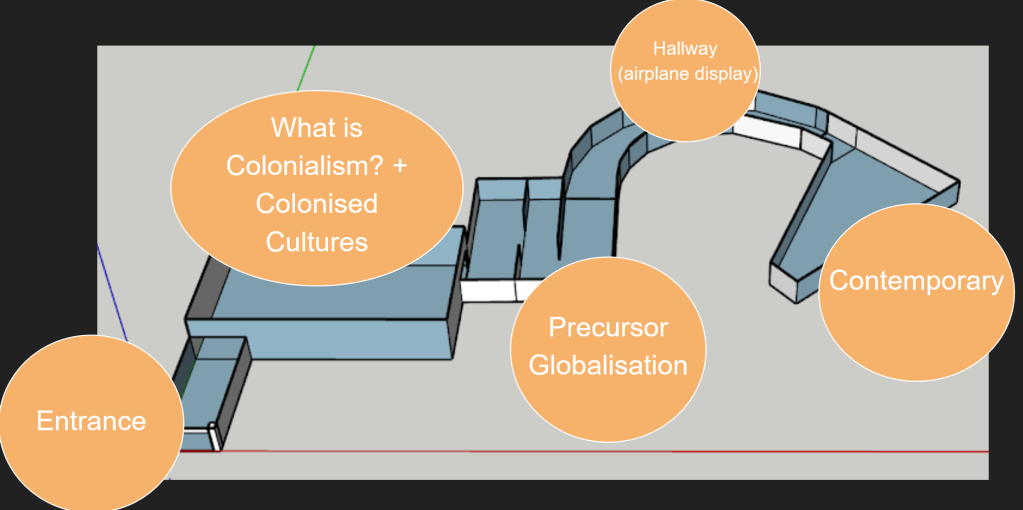
First Section of the Exhibition
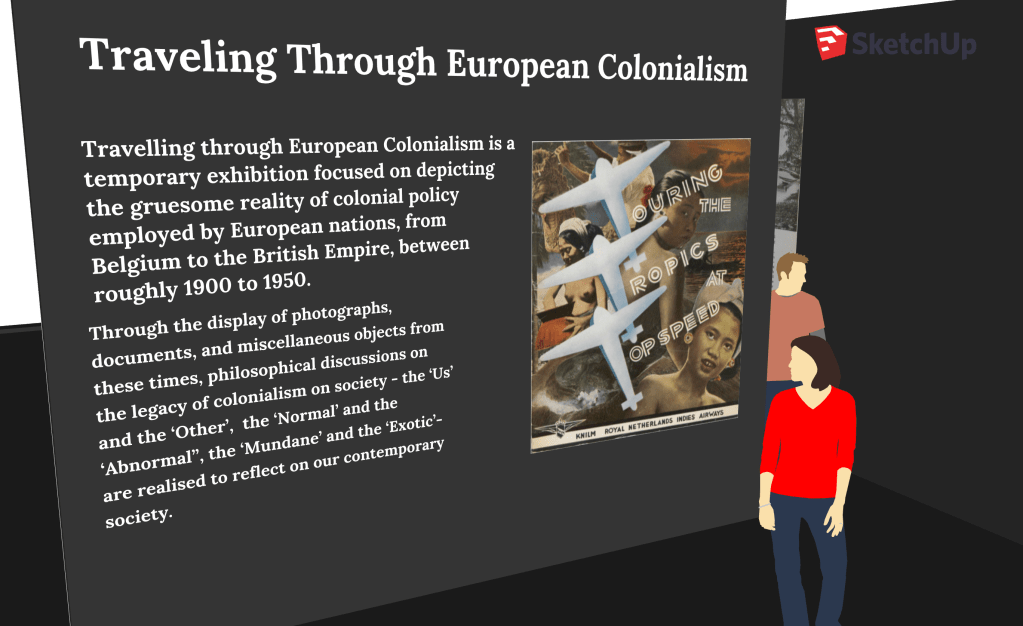
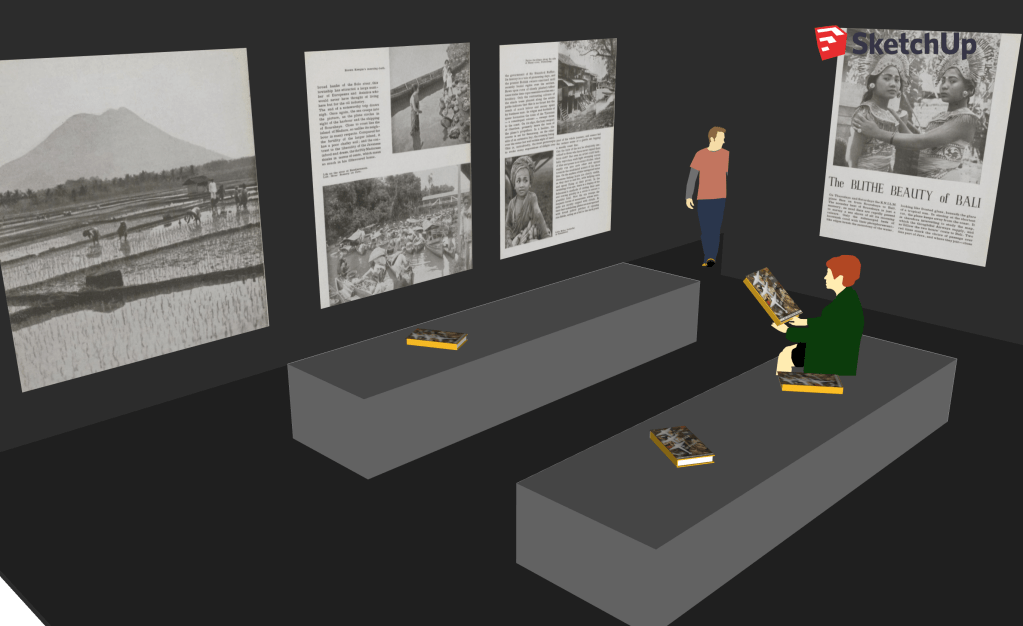
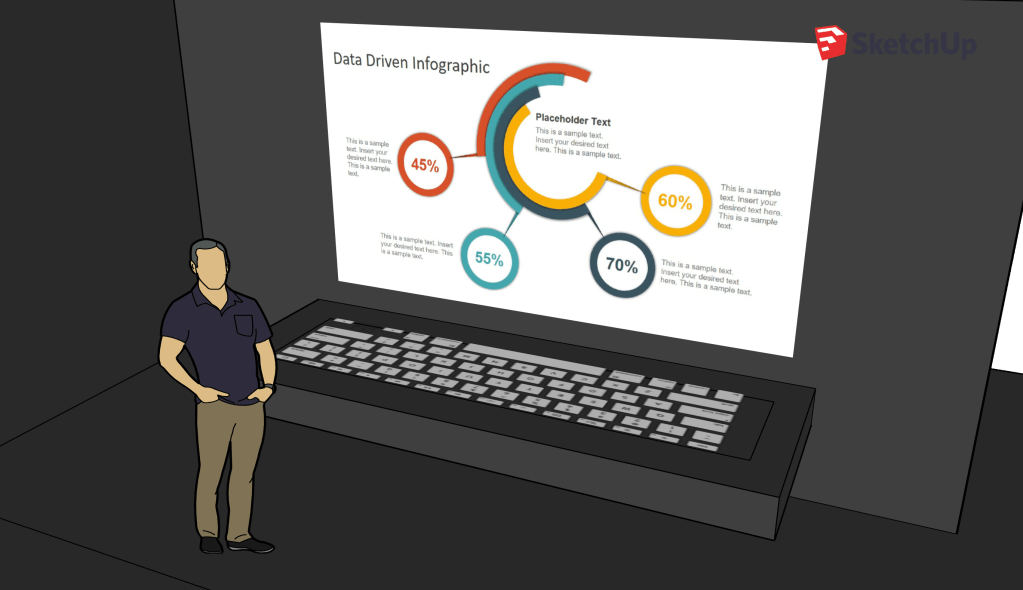
Last Section of the Exhibition


Top 10 objects in the exhibition
- Touring the Tropics at Topspeed, 1900s.

21cm x 14.8cm, paper
2. Alice Seeley Harris, photograph of Congolese Man, Belgian Congo, 1904.
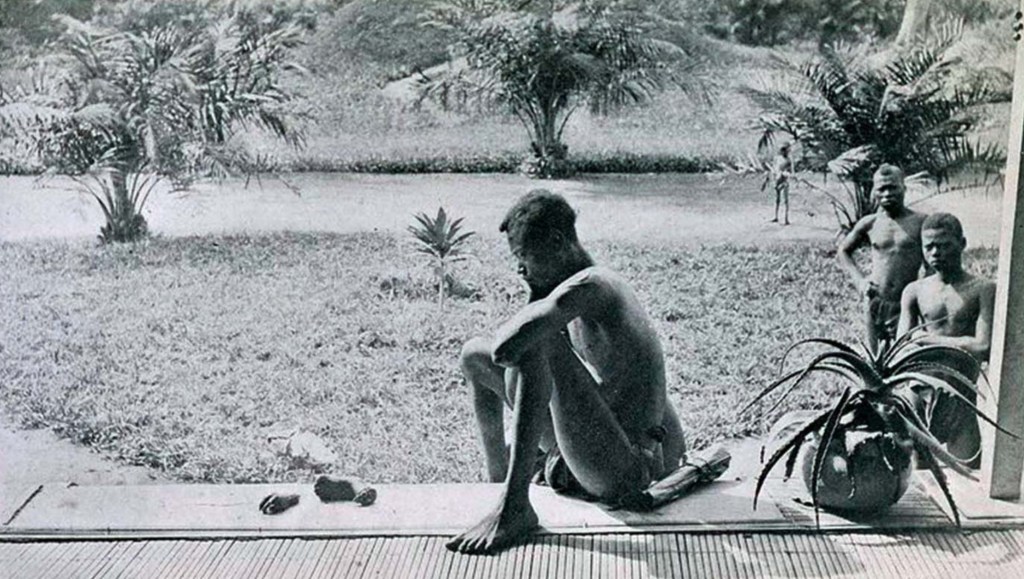
25.5cm x 20.5cm, print.
3. Sir William Emerson, design of Victoria Memorial Hall, 1928.

101.11cm x 78.53cm, print.
4. Anonymous, photograph of Joseph Gallieni, Madagascar, 1899.
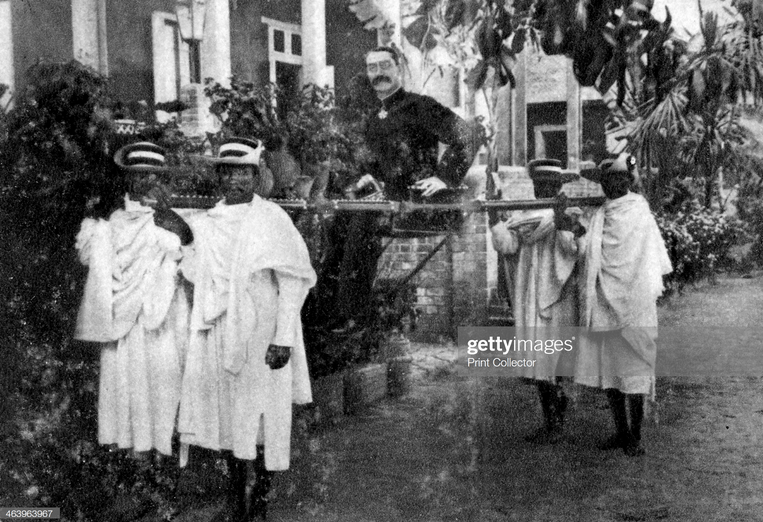
42.56cm x 29.42cm, print.
5. Utagawa Hiroshige, The Residence with Plum Trees at Kameido, 1857.
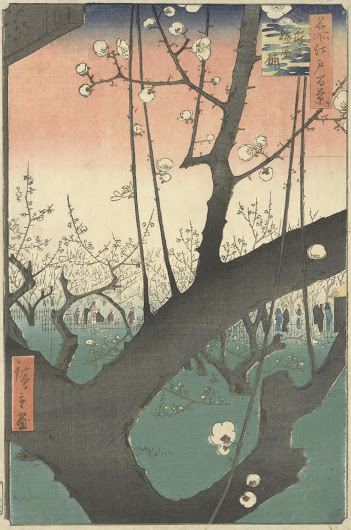
25.4cm x 37cm, woodblock print.
6. Vincent van Gogh, Flowering Plum Orchard (after Hiroshige), 1887.

55.6cm x 46.8cm, oil on canvas.
7. Pablo Picasso, Head of a Woman, 1907.
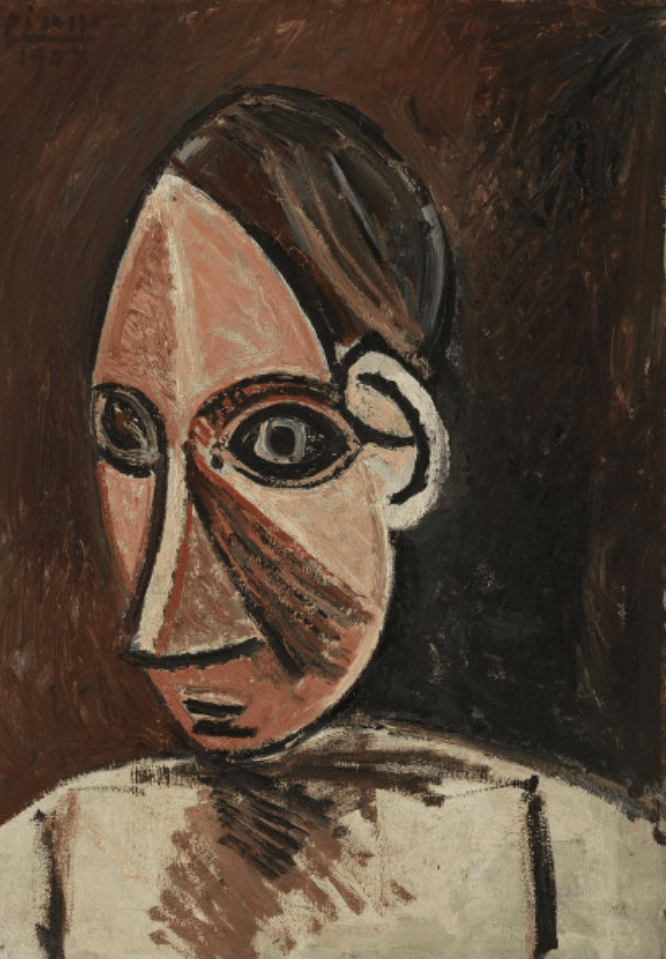
46cm x 33cm, oil on canvas.
8. Unknown, Tanka Gle or Dean Gle, late 19th–early 20th century.
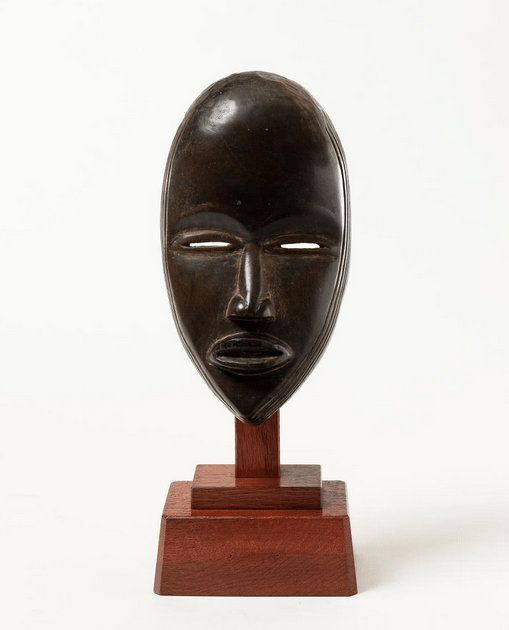
35.6cm x 14.3cm x 10.cm (with mount), wood.
9. Nacho Calonge, photograph of Zwarte Pieten on Sinterklaas Day in Apeldoorn, 2019.
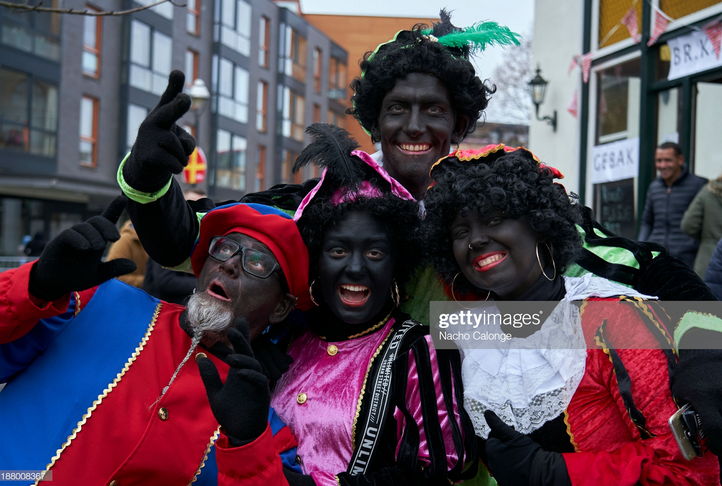
25.5cm x 20.5cm, print.
10. Instagram content “Swirv” by Justin Bieber, 2016.

100cm x 50cm, print
 Travelling through European Colonialism